























Folly Farm Adventure Park and Zoo is a major family attraction in Begelly, Pembrokeshire, Wales, combining a working farm, zoo, and vintage fairground. It is one of Wales’s most popular all-weather destinations, drawing hundreds of thousands of visitors annually for its mix of animal encounters and nostalgic entertainment.
Location: Begelly, near Saundersfoot, Pembrokeshire, Wales
Opened: 1988
Area: Over 120 acres
Main features: Zoo, vintage funfair, adventure play, and farmyard
Accreditation: BIAZA- and EAZA-accredited zoo
Originally a working dairy farm, Folly Farm opened to the public in 1988 as a modest visitor attraction. It has since expanded dramatically, evolving from an agricultural display into one of the UK’s top animal parks. Key additions have included the zoo in 2000 and significant animal habitats through the 2010s, supported by continued investment in facilities and education.
The site integrates four main areas: the Folly Zoo, the Jolly Barn and farmyard, the indoor and outdoor adventure play zones, and the vintage funfair with restored rides from the early 20th century. Visitors can see animals such as lions, giraffes, penguins, rhinos, and lemurs alongside traditional farm species. Seasonal events and feeding sessions enhance its family appeal.
As a member of the British and Irish Association of Zoos and Aquariums and the European Association of Zoos and Aquaria, Folly Farm participates in European breeding programs for endangered species. It also provides educational outreach for schools, focusing on biodiversity, sustainable farming, and animal welfare.
Folly Farm is open most of the year and offers indoor and outdoor attractions, making it suitable in all weather conditions. It consistently receives tourism awards for family excellence and accessibility, reinforcing its role as a cornerstone of Pembrokeshire’s leisure and tourism economy.
Tenby is a historic seaside town on the southwest coast of Pembrokeshire, Wales. Known for its medieval walls, pastel-colored harbor, and sweeping sandy beaches, it has long been one of Wales’s most popular holiday destinations. Its mix of history, natural beauty, and seaside leisure defines its enduring appeal.
Location: Pembrokeshire, Wales, United Kingdom
Population: Approximately 4,800 (2021 census)
Founded: Medieval period, around the 12th century
Languages: English and Welsh
Notable features: Walled town, harbor, North and South beaches
Tenby developed around a Norman castle built in the 12th century. Its stone walls, constructed in the 13th century, still largely encircle the old town. By the Georgian era, it became a fashionable spa and resort, attracting visitors from across Britain. The town’s historic streets retain much of this period charm, with narrow lanes, old merchant houses, and distinctive painted facades.
Situated on Carmarthen Bay, Tenby is framed by three main beaches: North Beach, South Beach, and Castle Beach. The coastline offers views toward Caldey Island, a short boat trip away, known for its monastery and wildlife. The Pembrokeshire Coast Path runs through the town, linking it to nearby coves and cliffs.
Tourism is Tenby’s primary industry, supported by seasonal visitors, festivals, and a strong local hospitality sector. The harbor remains active with small fishing and leisure boats, while local businesses cater to walkers, beachgoers, and history enthusiasts. The town is also a key gateway to the wider Pembrokeshire Coast National Park.
Tenby hosts events such as the Tenby Arts Festival and is the site of the Wales Ironman triathlon. Welsh heritage and bilingual culture are celebrated through local schools, signage, and community initiatives. The town’s combination of cultural identity and coastal scenery makes it a hallmark of Welsh seaside life.
Fishguard is a coastal town in Pembrokeshire, southwest Wales, situated where the River Gwaun meets the sea. Known for its harbor and dramatic cliffs, it serves as both a working port and a gateway for ferry travel between Wales and Ireland. The town combines maritime heritage, cultural festivals, and scenic landscapes within the Pembrokeshire Coast National Park.
Location: Pembrokeshire, Wales
Population: Around 3,400 (2021 estimate)
Harbor: Fishguard Harbor, opened 1906
Ferry link: To Rosslare via Stena Line
Historic event: Site of the 1797 French landing attempt
Fishguard lies on Cardigan Bay’s rugged shoreline and is divided into two areas: Lower Fishguard, clustered around the old harbor, and the higher town, which serves as the main commercial center. The surrounding coastline features cliffs, coves, and walking routes along the Pembrokeshire Coast Path, offering views over the Irish Sea.
The town’s origins trace to medieval trading and fishing settlements. It gained renown in 1797 when French forces attempted an invasion—famously repelled by local volunteers in what’s often called “the last invasion of Britain.” Fishguard later grew around shipping and the rail-connected port, built in the early 20th century to support trans-Irish routes.
Fishguard’s economy combines tourism, ferry services, and local commerce. Stena Line operates daily sailings to Rosslare, maintaining the town’s maritime significance. Road and rail links connect Fishguard to Haverfordwest and wider south Wales, supporting both visitors and residents.
Fishguard hosts the annual Fishguard International Music Festival, celebrating classical and Welsh music traditions. Nearby attractions include Gwaun Valley, Dinas Head, and Strumble Head Lighthouse. Local heritage centers and public art commemorate the 1797 events and maritime life central to Fishguard’s identity.
St Davids Cathedral is a medieval church in St Davids, Pembrokeshire, Wales, built on the site traditionally associated with Saint David, the patron saint of Wales. It serves as the seat of the Bishop of St Davids and stands at the heart of Britain’s smallest city, a major site of pilgrimage since the Middle Ages.
Location: St Davids, Pembrokeshire, Wales
Founded: 12th century (current structure begun 1181)
Dedication: Saint David, patron saint of Wales
Architectural style: Romanesque with later Gothic additions
Status: Active Anglican cathedral (Church in Wales)
The cathedral’s origins trace to a monastic community established by Saint David in the 6th century. Following repeated Viking raids, construction of the present stone building began in 1181 under Bishop Peter de Leia. For centuries, two pilgrimages to St Davids were considered equivalent to one to Rome, making it a key medieval spiritual center.
The cathedral showcases a mix of Norman and Gothic elements, with a distinctive sloping floor caused by the uneven valley ground. Notable features include a finely carved 15th-century wooden ceiling, the 14th-century tower, and the Bishops Palace ruins nearby. Extensive restoration by architect George Gilbert Scott in the 19th century stabilized the structure while preserving its character.
St Davids Cathedral remains a focal point for Welsh religious identity. It hosts the annual St David’s Day services and regular choral music. Pilgrims and visitors continue to venerate Saint David’s relics in the shrine behind the high altar, while the surrounding city’s cathedral status underpins its designation as the smallest in the UK.
Pembroke Castle is a large medieval fortress in Pembroke, Wales, notable as the birthplace of King Henry VII of England. Set beside the River Pembroke, the castle is among the best-preserved Norman structures in Britain and a key landmark in Welsh and Tudor history.
Location: Pembroke, Pembrokeshire, Wales
Founded: Late 11th century by Roger de Montgomery
Rebuilt: 12th–13th centuries in stone by William Marshal
Notable event: Birthplace of Henry VII (1457)
Managed by: Pembroke Castle Trust
The original motte-and-bailey structure was established around 1093 during the Norman conquest of southwest Wales. William Marshal, one of medieval England’s most powerful magnates, rebuilt it in stone between 1189 and 1220, creating its massive circular keep and defensive walls. The castle became a symbol of Norman authority in Wales.
Pembroke Castle’s most famous association is with the birth of Henry Tudor, later Henry VII, in 1457. His mother, Margaret Beaufort, gave birth within the castle during the Wars of the Roses. Henry’s eventual victory at the Battle of Bosworth Field founded the Tudor dynasty, linking Pembroke permanently with English royal history.
The castle’s layout features an immense round keep, a great hall, domestic buildings, and an extensive curtain wall with defensive towers. Beneath lies the Wogan Cavern, a large natural cave that may have served as a storehouse or landing point. Its design reflects both military strength and the prestige of its Norman lords.
After the Civil War siege of 1648, the castle was slighted (partially demolished) by Parliamentarian forces. It remained a ruin until the early 20th century, when extensive restoration began under Sir Ivor Philipps. Today, Pembroke Castle is a major heritage attraction, hosting exhibitions, guided tours, and historical reenactments.
The Pembrokeshire Coast Path is a long-distance walking trail along the rugged coastline of southwest Wales. It spans the entire length of the Pembrokeshire Coast National Park, offering dramatic sea views, wildlife encounters, and access to historic coastal communities.
Length: Approximately 186 miles (299 kilometers)
Location: Pembrokeshire, Wales
Established: 1970
Route endpoints: Amroth (south) to St Dogmaels (north)
National Trail designation: Part of the Wales Coast Path (2012)
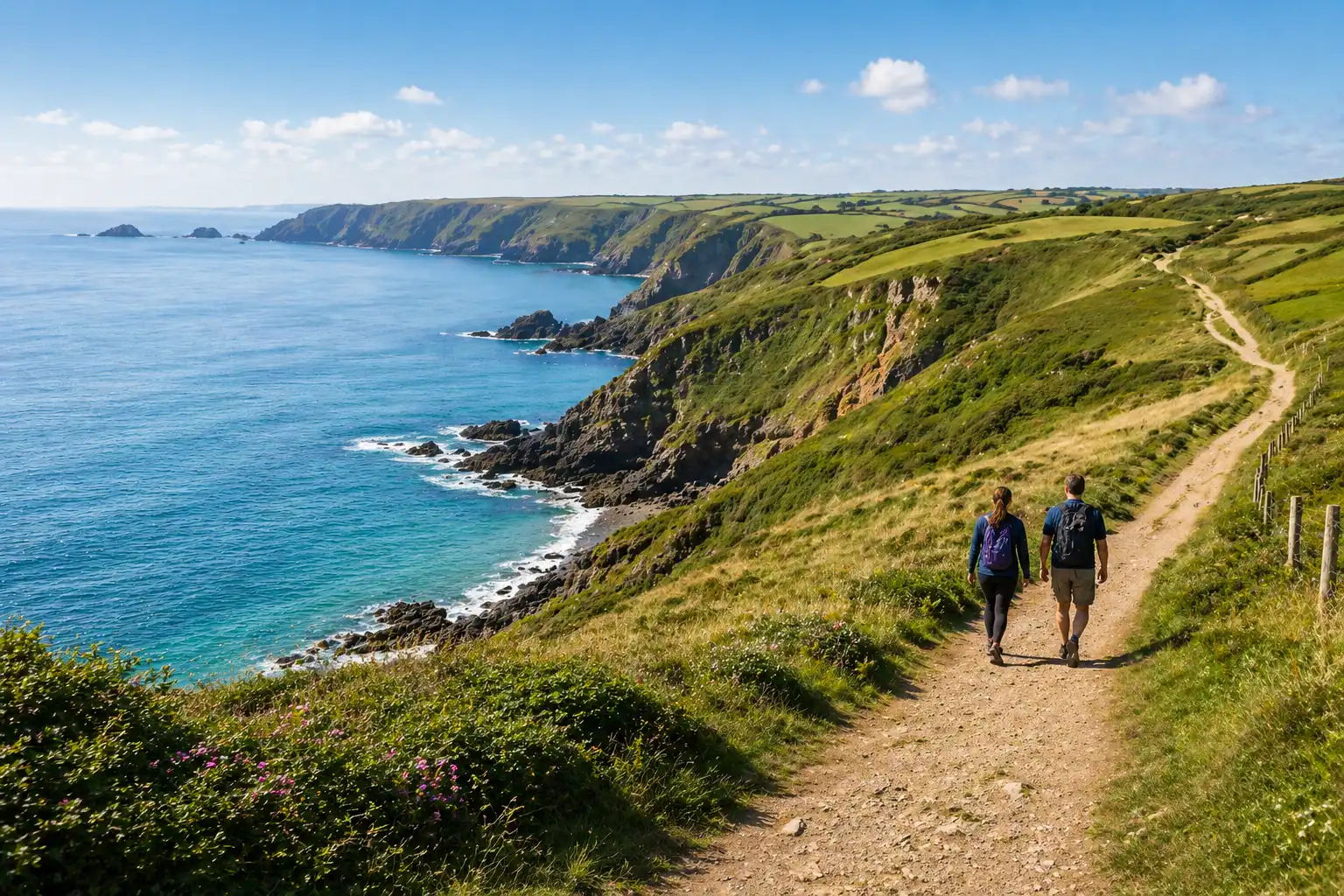
The trail follows the Pembrokeshire coast from Amroth to St Dogmaels, covering a mix of cliffs, coves, beaches, and estuaries. Walkers encounter significant elevation changes—equivalent to climbing Mount Everest in total ascent. The path passes through notable sites such as St Davids Head, Barafundle Bay, and the Preseli Hills’ coastal edge.
Running entirely within the Pembrokeshire Coast National Park, the path traverses protected habitats rich in seabirds, seals, and coastal flora. It also connects medieval settlements, Iron Age forts, and working harbors, reflecting Pembrokeshire’s maritime heritage. Popular stopovers include Tenby, St Davids, and Fishguard.
The path can be completed in two to three weeks or explored in shorter segments using local bus links. Waymarking and facilities are well maintained, with accommodations ranging from campsites to inns along the route. It forms part of the Wales Coast Path, which encircles the entire Welsh coastline.
Renowned for its scenic diversity and accessibility, the Pembrokeshire Coast Path is frequently listed among the world’s finest coastal walks. It attracts hikers, photographers, and nature enthusiasts seeking an immersive experience of Wales’s maritime landscapes.
Pembrokeshire Coast National Park is a protected coastal area in southwest Wales, established in 1952. It is Britain’s only national park primarily designated for its coastline, renowned for dramatic sea cliffs, golden beaches, and rich wildlife habitats that attract millions of visitors each year.
Location: Pembrokeshire, Wales
Established: 1952
Area: About 620 square kilometers
Managing body: Pembrokeshire Coast National Park Authority
UNESCO status: Part of the UK’s Coastal Geopark network
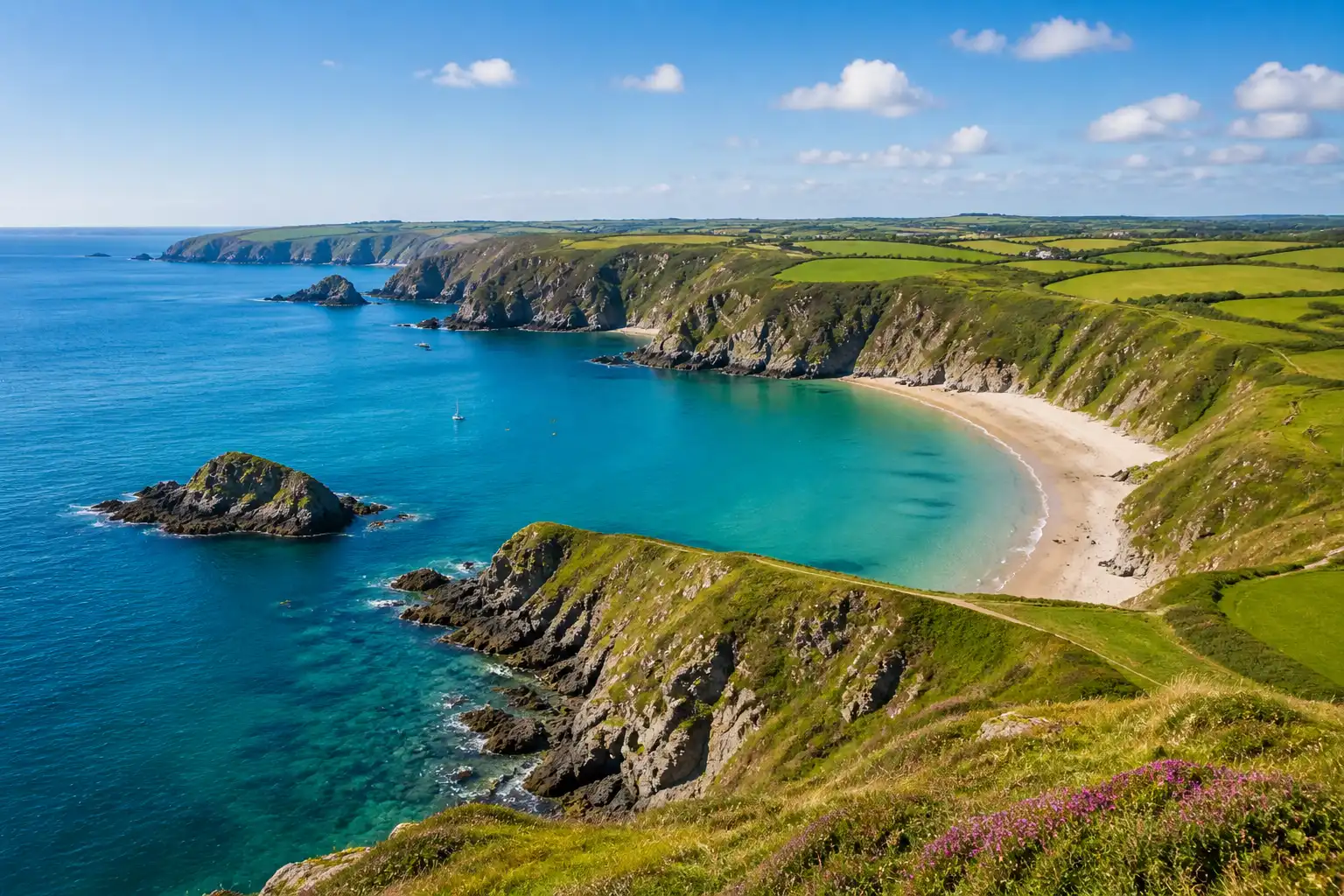
The park extends along approximately 240 kilometers of rugged coastline, encompassing sandy beaches, estuaries, and headlands. Inland, it includes the Preseli Hills and the Daugleddau Estuary. Its geology features sedimentary cliffs and unique rock formations such as the Green Bridge of Wales, offering striking contrasts between land and sea.
The park hosts diverse ecosystems supporting seabirds, seals, and rare plants. Offshore islands like Skomer, Skokholm, and Ramsey are vital breeding grounds for puffins, guillemots, and Manx shearwaters. Marine environments sustain dolphins and grey seals, emphasizing the park’s importance for both terrestrial and marine conservation.
Outdoor activities are central to the park’s appeal. The 299-kilometer Pembrokeshire Coast Path offers continuous public access along the shoreline, forming part of the Wales Coast Path. Visitors enjoy hiking, coasteering, kayaking, surfing, and wildlife watching amid internationally recognized scenic beauty.
The region’s cultural heritage includes prehistoric sites, medieval castles, and the cathedral city of St Davids, the smallest city in the UK. Local communities maintain Welsh-language traditions and maritime crafts, linking cultural identity closely with the coastal environment.
The Pembrokeshire Coast National Park Authority oversees sustainable tourism, biodiversity protection, and coastal management. Balancing ecological preservation with community needs and visitor access remains a key challenge, ensuring the park’s natural and cultural treasures endure for future generations.